Simple ways to keep winter grime from ruining your hardwood, and the best mudroom flooring for Southern Maine homes
Every Maine homeowner knows the routine. From the first November storm through the end of April, your front door becomes a checkpoint for snow, slush, road salt, sand, and eventually mud. Most of that ends up on the first six feet of your floor.
Entryways, mudrooms, and back halls take more abuse than any other floor in a Maine home. At Quality Floor Finishers, we've been sanding, refinishing, and installing floors across Southern Maine since 1987, and the wear we see by the door is predictable. The good news is that a little prevention goes a long way. When a floor is beyond saving, materials are built for exactly this job.
Here's what salt, sand, and mud do to your floors, and how to protect them this season.
What Road Salt and Sand Actually Do to Your Floors
Road salt. The de-icers spread on Maine roads, driveways, and sidewalks get tracked in on boots and pet paws. As the meltwater dries, it leaves a white, chalky film behind. On hardwood, that residue dulls and wears down the protective finish. Once the finish is gone, moisture can reach the bare wood and cause gray staining, raised grain, or cupping. On tile, salt residue builds up in grout lines. On vinyl and laminate, it leaves a hazy film that dulls the surface.
Sand. Towns across Southern Maine mix sand into their winter treatment for traction. Under a boot heel, that sand works like sandpaper. A few weeks of grinding grit can scratch through a hardwood finish faster than years of normal foot traffic.
Standing water. Snow melting off boots pools on the floor. On hardwood, standing water is the fastest path to permanent damage, especially along board seams.
Mud season. Just when the salt slows down in March and April, the mud arrives. It carries the same grit, more moisture, and a lot more of it, especially if you live on a dirt road or have a dog.
7 Ways to Protect Your Entryway Floors This Winter
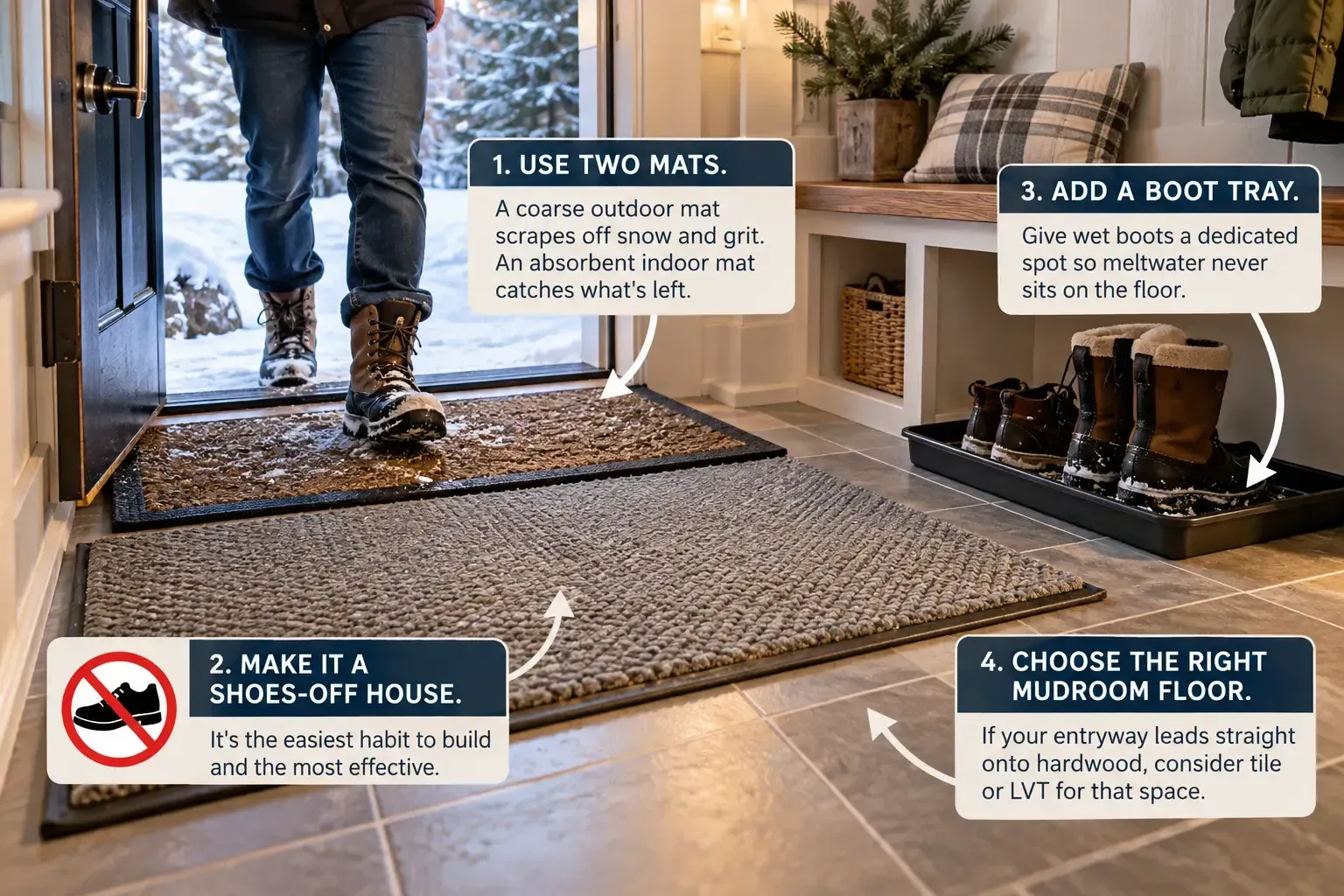
1. Use a two-mat system. Put a coarse, bristled scraper mat outside the door to knock off snow and sand. Inside, add an absorbent walk-off mat long enough for at least two or three full steps. Most grit comes off in the first few steps, so a tiny decorative mat isn't enough.
2. Choose mats carefully. Some rubber- and latex-backed mats can trap moisture or discolor vinyl and some floor finishes over time. Look for mats labeled safe for your floor type, and lift them regularly to let the floor underneath dry.
3. Add a boot tray and a no-shoes rule. A boot tray with a raised lip keeps meltwater off the floor completely. Pair it with a bench so everyone, guests included, has an easy place to take boots off.
4. Sweep or vacuum daily during the worst stretches. Removing loose sand before it gets ground in is the single most effective thing you can do. Use a vacuum without a beater bar on hardwood.
5. Clean salt residue with the right product. Wipe up salt film with a pH-neutral cleaner made for your floor type and a damp, not wet, microfiber mop. Skip harsh or acidic cleaners. Don't use vinegar on natural stone, and avoid it on hardwood unless your finish manufacturer approves it.
6. Wipe up puddles right away. Keep an old towel by the door. Standing meltwater is what turns surface wear into board damage.
7. Protect pets' paws and your floors. Wipe your dog's paws when they come in. It keeps salt off your floors and is easier on their pads.
When Prevention Isn't Enough: Signs Your Entryway Floors Need Help
If your hardwood by the door looks gray, dull, rough, or patchy compared with the rest of the room, the finish has likely worn through. Other warning signs include:
- Boards that look cupped or raised at the edges
- Dark or black stains near the door, a sign water has reached the wood
- A white haze that won't wipe away
- Scratches you can feel with a fingernail
Catching this early matters. Once the finish is gone, water and salt go straight into the wood. In many cases, professional sanding and refinishing can bring worn hardwood back, with no need to replace it. Our D.C.S. sanding system is 95% dust-free, so restoring a high-traffic entry or hallway won't leave fine dust throughout the rest of your home. Not sure whether your floors can be saved? Our guide, Should You Refinish or Replace Your Hardwood Floors?, walks through the decision.
The Best Flooring for Maine Mudrooms and Entryways
If you're renovating a mudroom, back entry, or hallway off the garage, choose a floor built for Maine winters from the start.
Porcelain tile. Porcelain is fired at higher temperatures than standard ceramic, which makes it harder, denser, and highly resistant to water, salt, and grit. For entryways, choose a textured or matte finish for better grip on wet floors. Polished tile can get slippery under snowy boots. Mid-tone or darker grout, sealed properly, hides salt and mud far better than white. We carry tile from MSI, Interceramic, Earthen Treasures, and Anatolia Tile and Stone.
Explore our tile flooring options.
Natural stone. Slate and other stones bring a classic New England look to a mudroom, and when properly sealed, they're less slick when wet. Stone needs periodic resealing and pH-neutral cleaners, since acidic products can etch the surface.
Luxury vinyl plank and tile (LVP/LVT). Luxury vinyl is water-resistant, comfortable underfoot, and convincingly mimics hardwood or stone. It's a great choice if you want your mudroom to flow visually into the wood floors of the rest of the house. It's also easy to clean when salt film builds up. We carry MSI, Next Floor, Tarkett ProGen, Quick Step, Goodfellow, Hallmark Floors, and Fusion Hybrid. See our LVT and LVP flooring.
What about hardwood at the front door? Plenty of Maine homes have beautiful hardwood right up to the front door, and it can absolutely last with good mats, quick cleanup, and periodic maintenance. If your main entry sees heavy daily traffic from kids, dogs, and work boots, a tile or LVP landing zone that transitions into hardwood can give you the best of both.
For more on choosing materials for moisture-prone rooms, see our room-by-room guide to carpet, tile, and LVT for basements and bathrooms. For the rest of your hardwood during heating season, read Hardwood Floors and Maine Winters.
Plan Ahead for Spring
Late spring, once mud season winds down, is an ideal time to assess the damage winter left behind. If your entryway hardwood needs refinishing, or you're ready to replace a worn-out mudroom floor with tile or LVP, booking ahead means your floors are ready long before the next November storm.
Frequently Asked Questions
Does road salt damage hardwood floors? Yes. Salt residue wears down the protective finish, and the meltwater that comes with it can stain, raise, or cup the wood once the finish is compromised. Mats, daily sweeping, and prompt cleanup with a pH-neutral hardwood cleaner keep damage to a minimum.
How do I get salt residue off my floors? Sweep or vacuum first to remove grit, then damp-mop with a pH-neutral cleaner made for your floor type. Use a well-wrung microfiber mop rather than a soaking-wet one, especially on hardwood. Avoid vinegar on natural stone, and check with your finish manufacturer before using it on hardwood.
What is the best flooring for a mudroom in Maine? Textured porcelain tile and luxury vinyl plank are the two most popular choices. Porcelain is extremely durable and resistant to water and salt. LVP is water-resistant, warmer and softer underfoot, and can match the look of hardwood elsewhere in the home.
Can hardwood floors damaged by salt and water be repaired? Often, yes. If the damage is limited to the finish and the surface of the wood, professional sanding and refinishing can restore it. Boards with deep black water stains or severe cupping may need to be replaced. An in-person assessment is the best way to know.
Will rubber-backed mats damage my floors? Some can. Certain rubber- and latex-backed mats trap moisture or can discolor vinyl and some finishes. Choose mats that are labeled safe for your floor type, and lift them periodically so the floor underneath can dry.
When is the best time to refinish entryway floors in Maine? Late spring through early fall is ideal. Mud season is over, humidity is more stable, and you can open windows if needed. Scheduling in spring also gives you a fresh, protected finish before the next winter.
Ready for Floors That Can Handle a Maine Winter?
Whether your entryway hardwood needs to be brought back to life or you're ready for a mudroom floor that shrugs off salt and slush, Quality Floor Finishers can help. All of our work is done by our own in-house crew, never subcontractors, and we've been serving Southern Maine homeowners since 1987.
Visit our showroom at 442 U.S. Route 1, Scarborough, ME 04074, call (207) 303-0391, or request your free estimate today. We serve Portland, South Portland, Scarborough, Old Orchard Beach, Saco, Biddeford, Kennebunk, Kennebunkport, and surrounding towns.
This is paragraph text. Click it or hit the Manage Text button to change the font, color, size, format, and more. To set up site-wide paragraph and title styles, go to Site Theme.