How to Protect Hardwood, Tile, and LVT from Road Salt, Tracked-In Sand, and Dry Furnace Heat
Every Maine homeowner knows the routine. The first cold snap hits, the furnace kicks on, and within weeks the entryway is covered in salt, sand, and slush. Your floors take the brunt of it. Between dry indoor air, gritty boots, and melting ice, winter can do more damage in five months than the rest of the year combined.
The good news is that most winter floor damage is preventable. At Quality Floor Finishers, we've been caring for floors across Southern Maine since 1987, and we see the same winter issues every spring. Here's how to get ahead of them before the first storm.
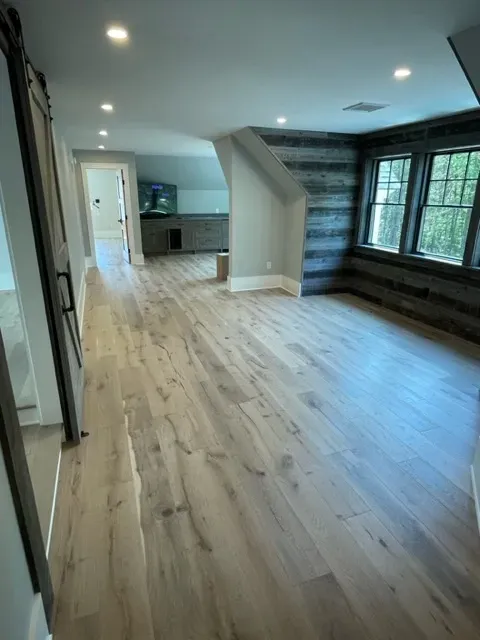
Why Your Hardwood Floors Develop Gaps in Winter
Wood is a natural material, and it responds to the surrounding air. When your heating system runs all winter, indoor humidity drops sharply. As the wood loses moisture, each board shrinks slightly, and small gaps appear between them.
In most homes, these seasonal gaps are completely normal. They usually close again once summer humidity returns. Watch for gaps that stay open year-round, grow wider each season, or come with cupping, cracking, or lifting boards. Those can point to a subfloor or moisture problem that deserves a closer look.
Many older homes in Kennebunk, Saco, and Biddeford have original wide-plank pine or oak floors. Wider boards move more than narrow ones, so gaps in these homes tend to be more noticeable. That's the character of the wood, not a flaw.
Keep Indoor Humidity in a Healthy Range
The single best thing you can do for hardwood in winter is manage humidity. Most hardwood manufacturers recommend keeping indoor relative humidity between roughly 35% and 55%. In a Maine winter, many homes drop well below that without help.
A few simple steps make a real difference:
- Pick up an inexpensive hygrometer to see where your home actually sits.
- Run a whole-house or room humidifier during the heating season.
- Avoid placing space heaters or wood stoves right next to hardwood.
- Keep humidity steady rather than letting it swing up and down.
Stable humidity protects the wood itself and the finish on top of it. It also keeps your floors looking consistent from room to room.
Build a Strong Entryway Defense
Road salt and beach sand are the two biggest threats to your floor's finish. Salt leaves a white, filmy residue that dulls the surface. Sand and grit act like sandpaper underfoot, scratching through the finish with every step.
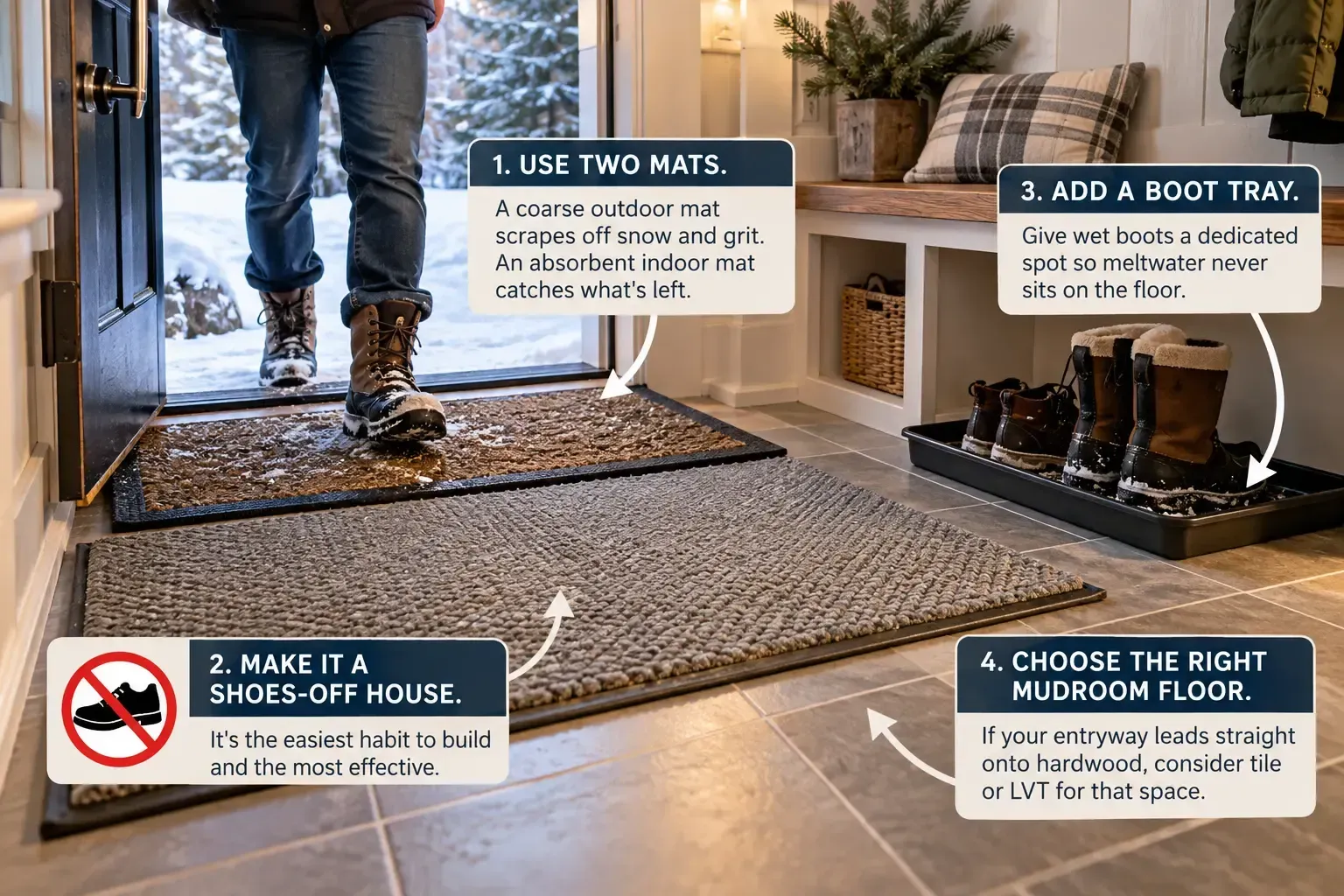
The goal is to stop them at the door:
- Use two mats. A coarse outdoor mat scrapes off snow and grit. An absorbent indoor mat catches what's left.
- Add a boot tray. Give wet boots a dedicated spot so meltwater never sits on the floor.
- Make it a shoes-off house. It's the easiest habit to build and the most effective.
- Choose the right mudroom floor. If your entryway leads straight onto hardwood, consider tile or LVT for that space.
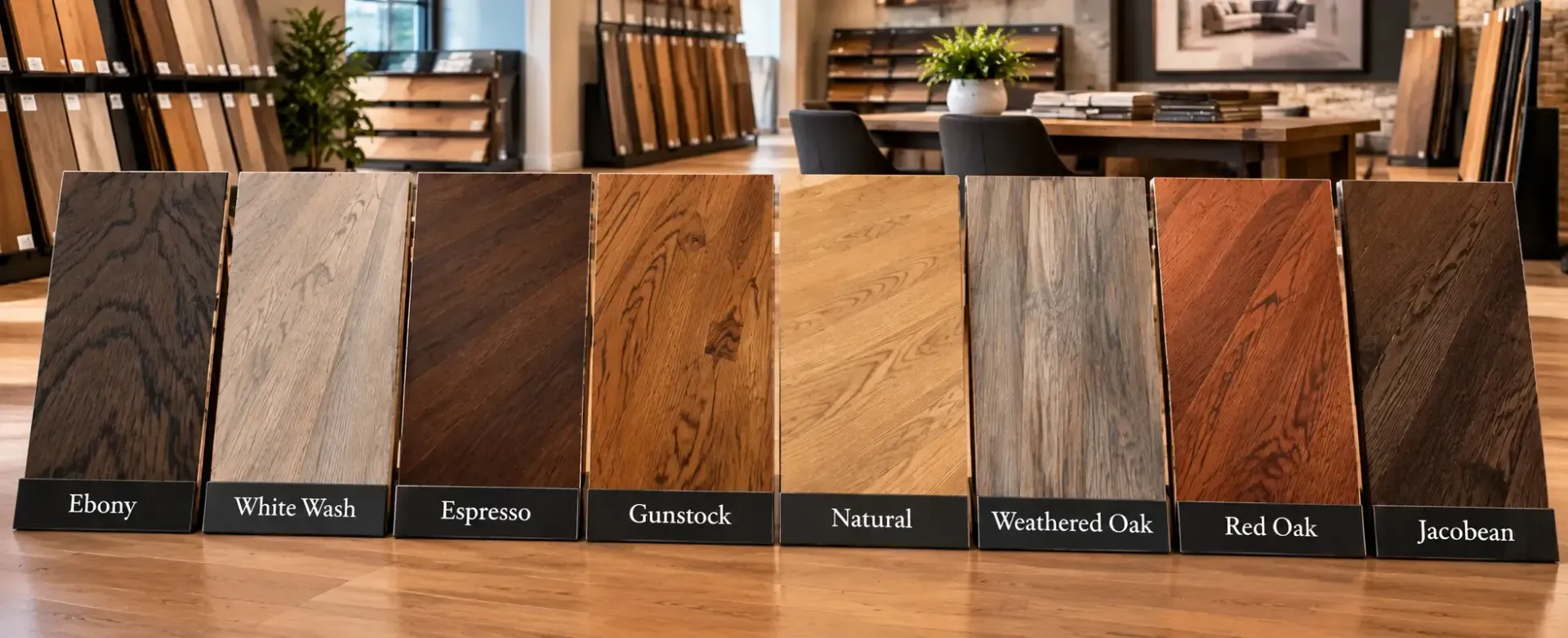
Porcelain tile and quality LVT hold up to water, salt, and heavy traffic far better than hardwood. Many of our customers in Old Orchard Beach, Scarborough, and Biddeford Pool choose one of these for their mudroom or back entry. It's a smart way to protect the rest of the house. Learn more about our tile flooring and LVT-LVP flooring options.
How to Clean Salt Residue Without Damaging Your Finish
Cleaning the wrong way can do as much harm as the salt itself. Keep these tips in mind:
- Sweep or vacuum first. Remove grit before you wipe so you don't grind it into the finish. Use a vacuum setting without a beater bar on hardwood.
- Use a pH-neutral hardwood cleaner. Skip vinegar, ammonia, and all-purpose cleaners, which can dull or break down the finish over time.
- Go light on water. Use a damp microfiber mop, never a soaking wet one.
- Avoid steam mops on hardwood. Heat and moisture can force their way between boards and damage the wood.
- Wipe up puddles quickly. Standing meltwater is one of the fastest ways to stain a floor.
For tile, a mild tile cleaner and warm water will lift salt film easily. Pay attention to grout lines, which can hold onto residue.
Protect Floors from Furniture and Holiday Traffic
Winter usually means more time indoors and more guests. Add felt pads to chair and table legs before the holidays. Use rugs in high-traffic paths, and choose ones with breathable backings that won't trap moisture or discolor the finish. If you're moving furniture for a tree or extra seating, lift it rather than dragging it.
Signs Your Floors Need Attention After Winter
When spring arrives, take a close look at your floors. These are signs it may be time for a recoat or full refinish:
- The finish looks dull or cloudy, even after cleaning.
- You see gray or worn paths near doorways and in hallways.
- Water no longer beads on the surface.
- Scratches have reached the bare wood.
- Dark spots or stains have appeared near entryways.
A screen-and-recoat can refresh a worn finish without sanding to bare wood. More serious damage may call for a full sand and refinish. Our 95% dust-free D.C.S. sanding system makes either one far less disruptive to your home. Read more about our sanding and refinishing process.
Plan Ahead: Now Is the Time to Book
If your floors are already looking tired, fall is the ideal window to refinish before holiday guests arrive. And if you'd rather wait out the winter, spring refinishing slots fill up quickly across Southern Maine. Booking early gives you the best date options.
Get a Free Winter Floor Consultation
Whether you need a durable mudroom floor, a fresh coat on worn hardwood, or advice on protecting what you have, our in-house team is here to help. Every installer has more than 10 years of experience, and we're fully insured, including workers' comp. We never use subcontractors.
Visit our showroom at 442 U.S. Route 1 in Scarborough, or contact us for a free, no-pressure estimate. We proudly serve South Portland, Portland, Scarborough, Old Orchard Beach, Saco, Biddeford, Kennebunk, and Kennebunkport.
Quality Floor Finishers. We Know Flooring.